

Build the Operation You've Always Needed
From Vision to Operational Structure
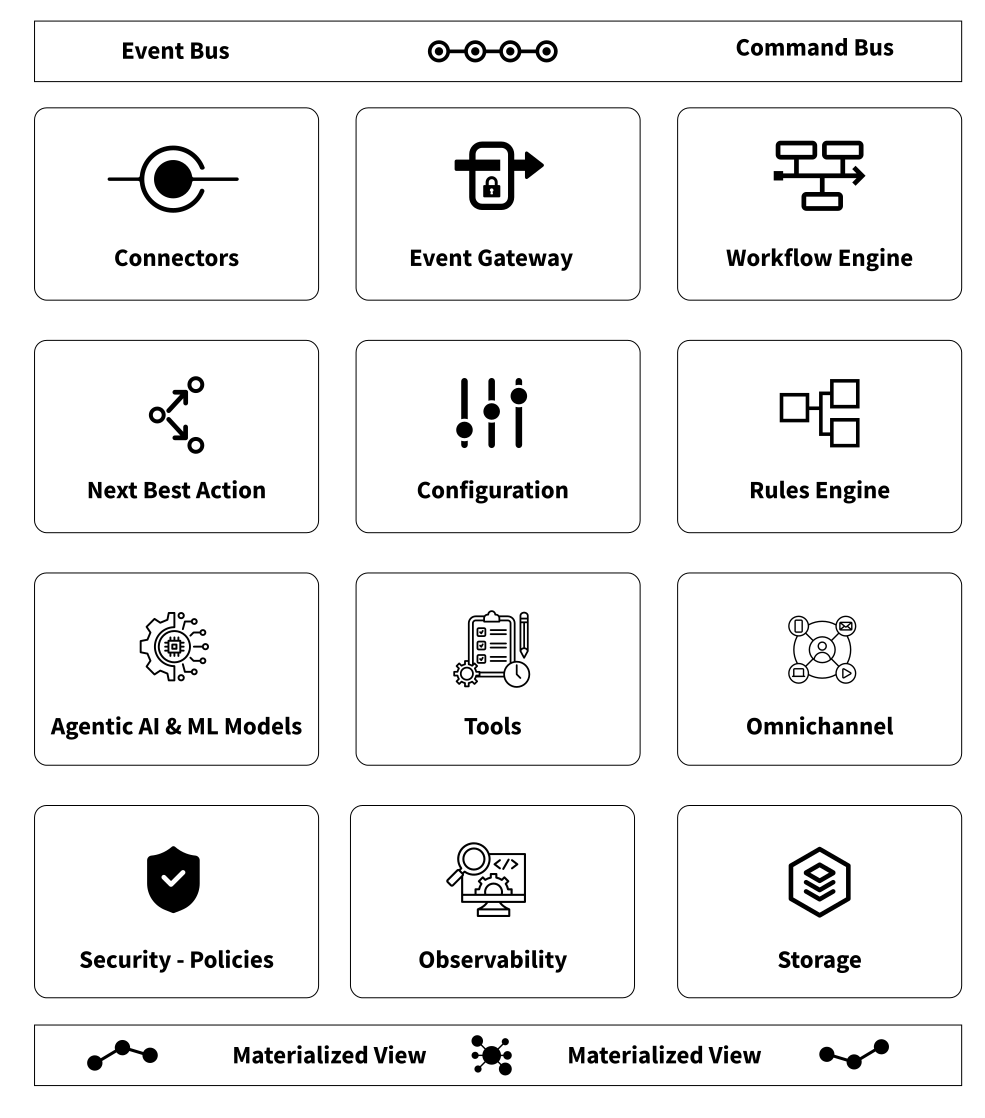
- Create a Clear Operational Blueprint
Define how work should move when systems are aligned, rules are explicit, and execution holds under pressure.
- Design Flows, Not Just Tasks
Move beyond patchwork automation by deliberately shaping how work flows across teams, systems, and decisions.
- Define Rules and Constraints
Define business rules and operating conditions that govern execution — so work behaves predictably under real load.
- Build for End-to-End Execution
Create operations that carry work from request to completion with consistency, visibility, and control at every stage.
Less Manual Work
Teams stop babysitting processes and focus on meaningful impact.
Faster Execution
Requests, decisions, and workflows move in minutes — not days.
Scalable Operations
Business grows smoothly without adding operational headcount.
Connectors
Connect to the tools you already run—securely, reliably, and at workflow speed
Drop connector actions into any workflow to read, write, sync, and enrich data—then reuse them across teams and use cases.
Keep secrets out of code with tenant-isolated, encrypted credentials and centrally managed access.
Run connector calls as durable activities with automatic retries, rate-limit awareness, and end-to-end observability.
Move files and large payloads efficiently via streamed artifacts instead of bloating workflow payloads.









Event Gateway
Capture, normalize, and route every event in real time so your workflows stay accurate, secure, and resilient
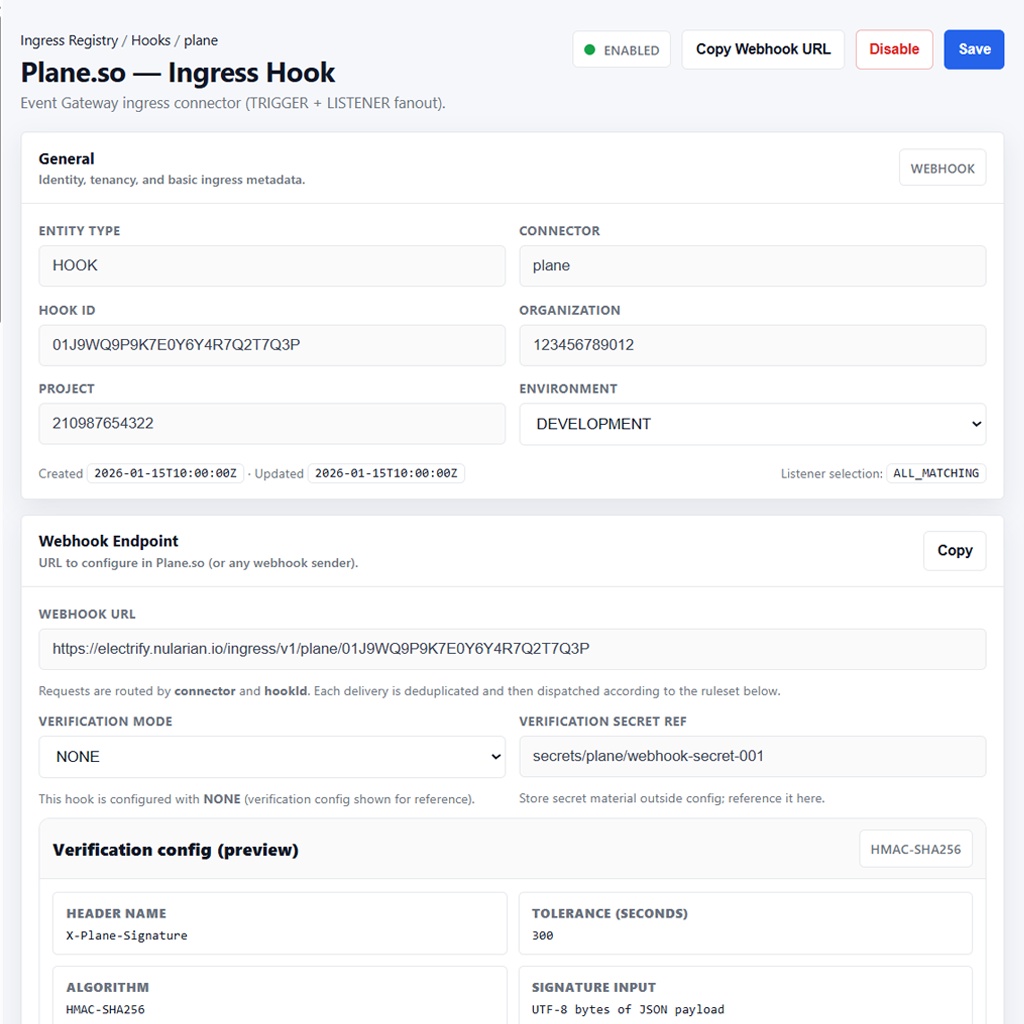
Retains all incoming events, providing a single source of truth for analyzing event flows.
Identifies duplicate events by hashing full payloads or specific fields, reducing noise and improving accuracy.
Maps events to internal workflows ensuring proper sequencing using sophisticated correlation techniques.
Expose long-running workflows as webhooks, enabling seamless integration with external systems.
Workflow Engine
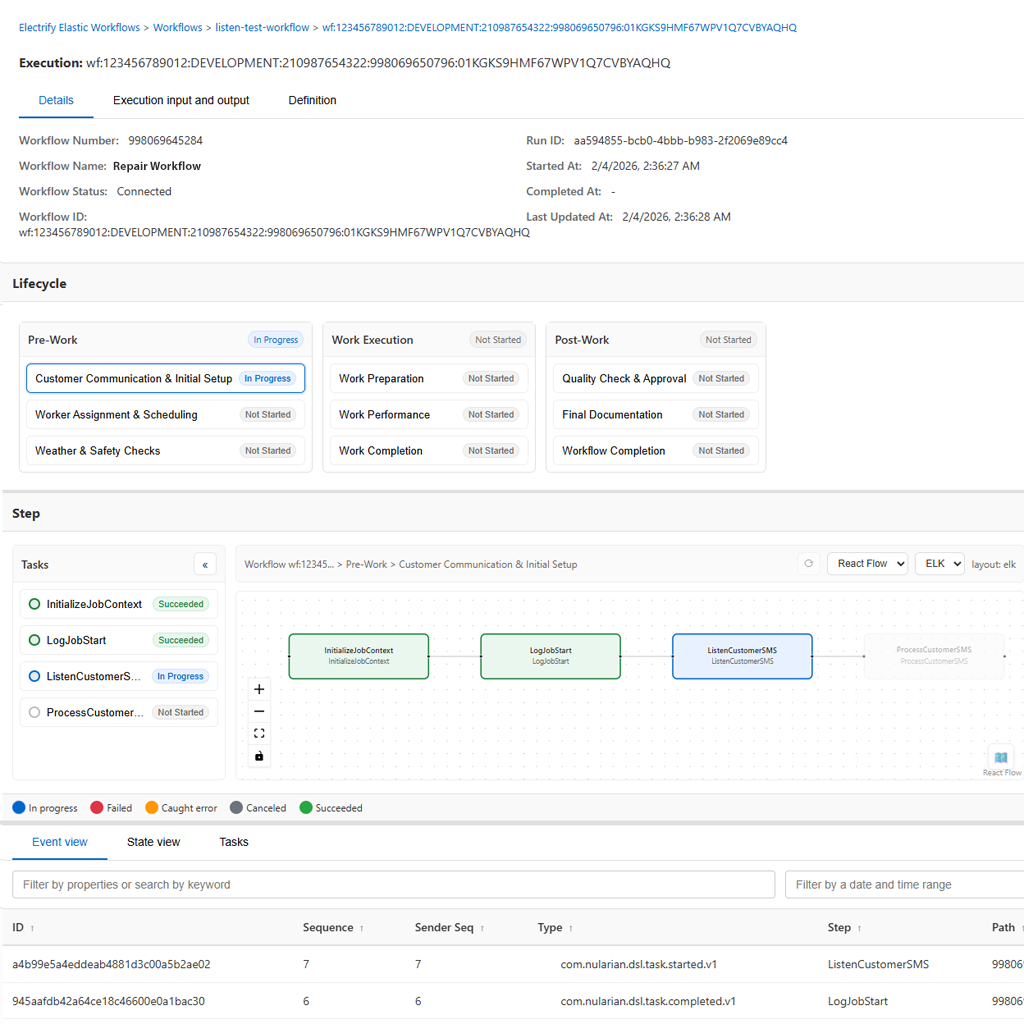
Run long-running, event-driven workflows that stay durable, adaptive, and in control
Pause, wait, and resume reliably using timers and external triggers—without losing context or momentum.
Correlate, deduplicate, and fold new events into state so workflows respond intelligently to change instead of breaking.
Keep decision logic deterministic and isolate external actions with idempotency keys, retries, and clear error semantics.
Track execution status, heartbeats, metrics, and telemetry so teams can troubleshoot fast and audit with confidence.
Materialized View
Turn scattered system data into a live, queryable view of your business—always ready for decisions
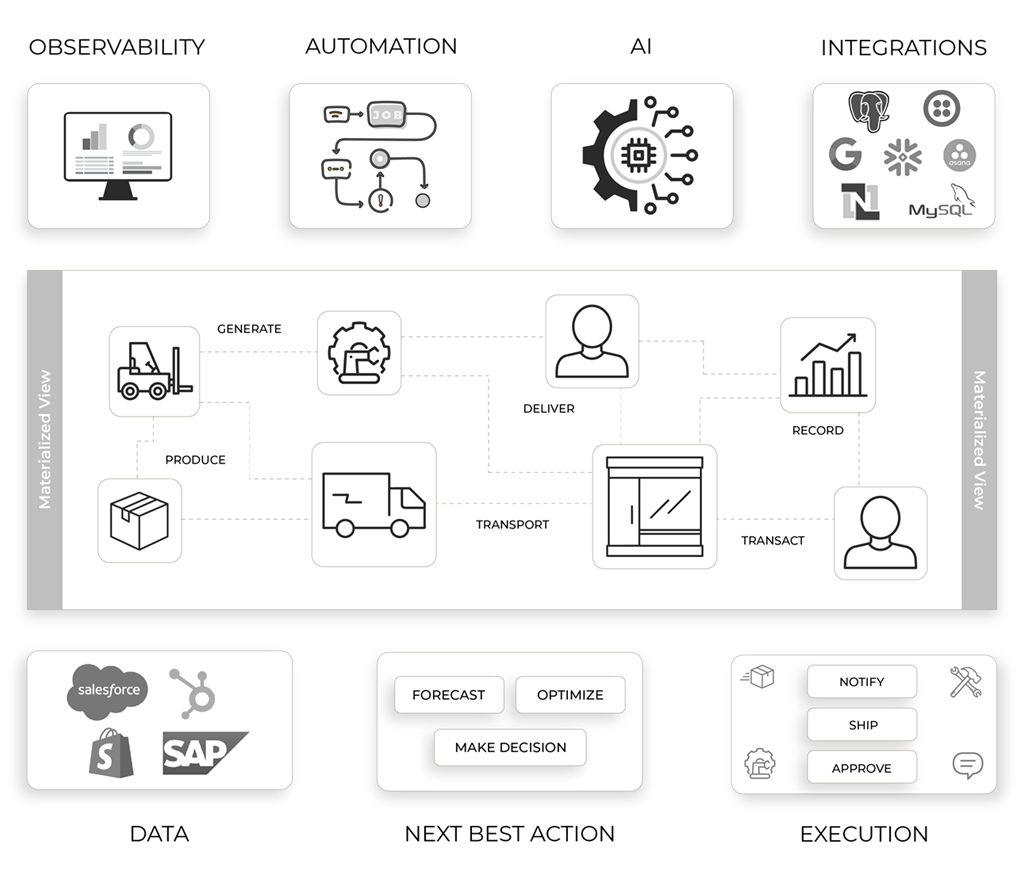
Hydration policies pull what's needed from Systems of Record, cache with TTL, and invalidate intelligently so decisions are made on current data.
Keep workflows lean by storing large snapshots externally and referencing them—so reliability stays high as data volume grows.
Project normalized facts and relationships into a read-optimized model that stays stable even as underlying systems evolve.
Enrich decisioning with consistent context—like customer history, related entities, and derived signals—while maintaining tenant isolation and access control.
Next Best Action
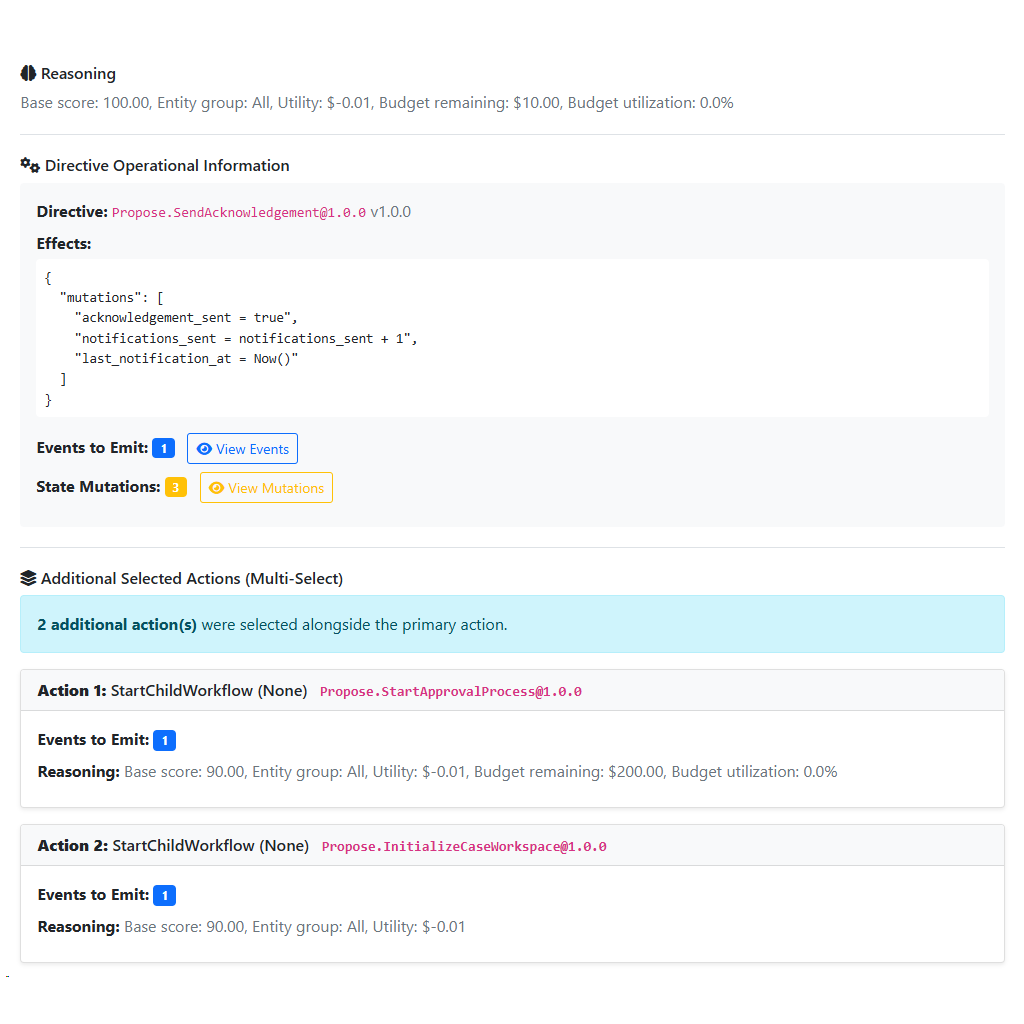
Choose the right action, channel, and timing—automatically, consistently, and with clear rationale
Combine entity facts, independent facts, and optional ML scores to prioritize actions based on impact, cost, and confidence.
Filter and constrain recommendations for consent, compliance, budgets, and operational limits before anything is executed.
Return clear reasoning for why an action won—so humans trust the system and teams can tune outcomes faster.
Evolve strategies, plans, ranking packs, and policies through configuration so improvements roll out safely and consistently.
Electrify Configuration
Govern every workflow change with versioning, promotion, and audit-ready control
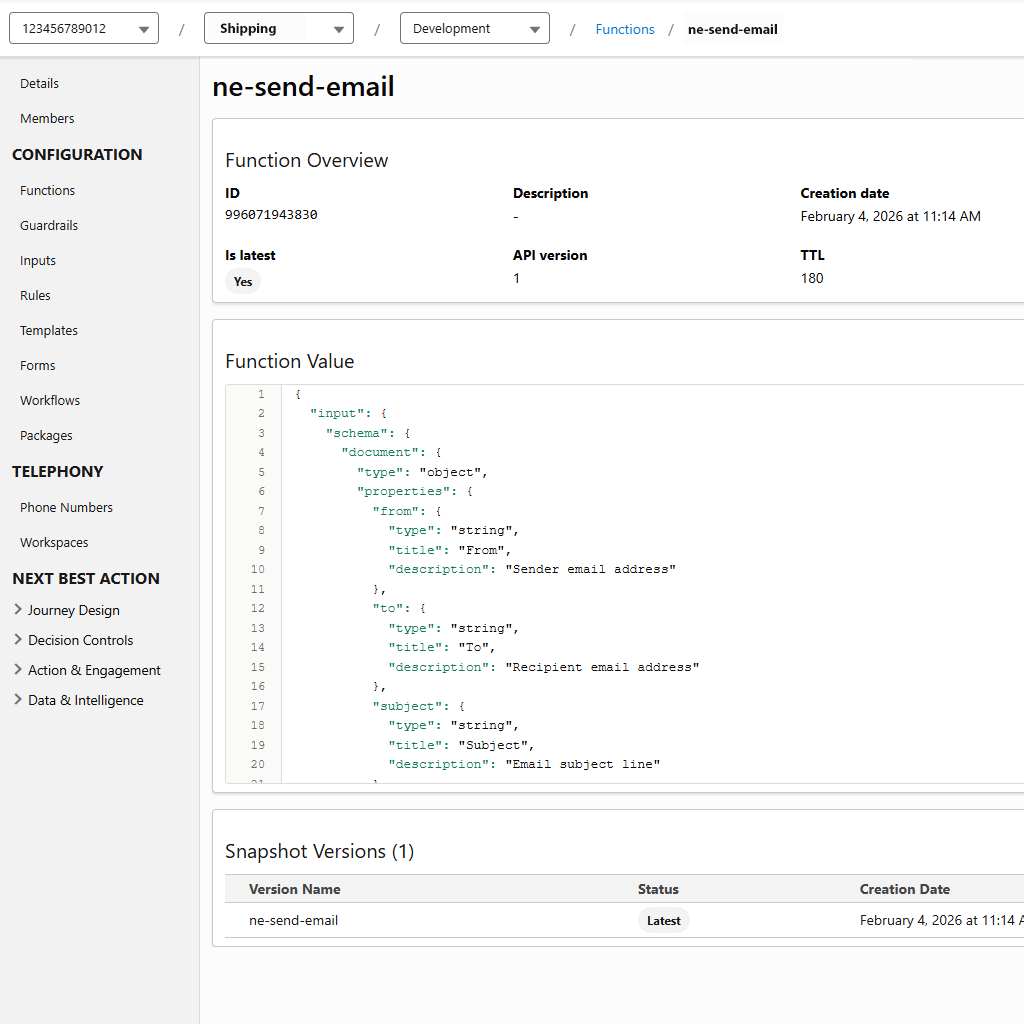
Make changes with version checks and automatic history entries so you can trace who changed what—and roll forward confidently.
Move the exact configuration you tested into production via enforced promotion paths and immutable environment snapshots.
Keep organizations, projects, and environments isolated with scoped configuration keys and consistent access patterns.
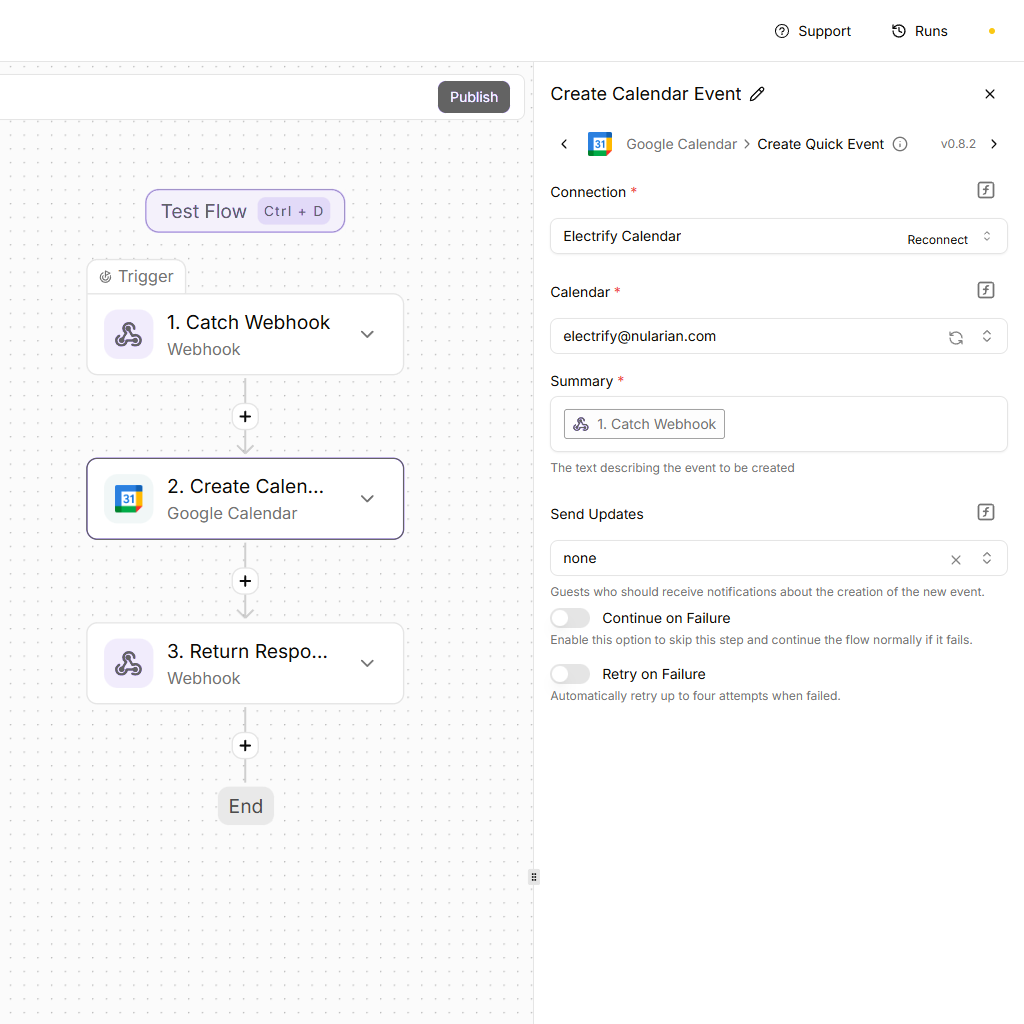
Support development and sandboxes with environment-variable substitution while keeping promoted environments stable and reproducible.
Rules Engine
Make complex business decisions fast, explainable, and safe to change—without redeploys
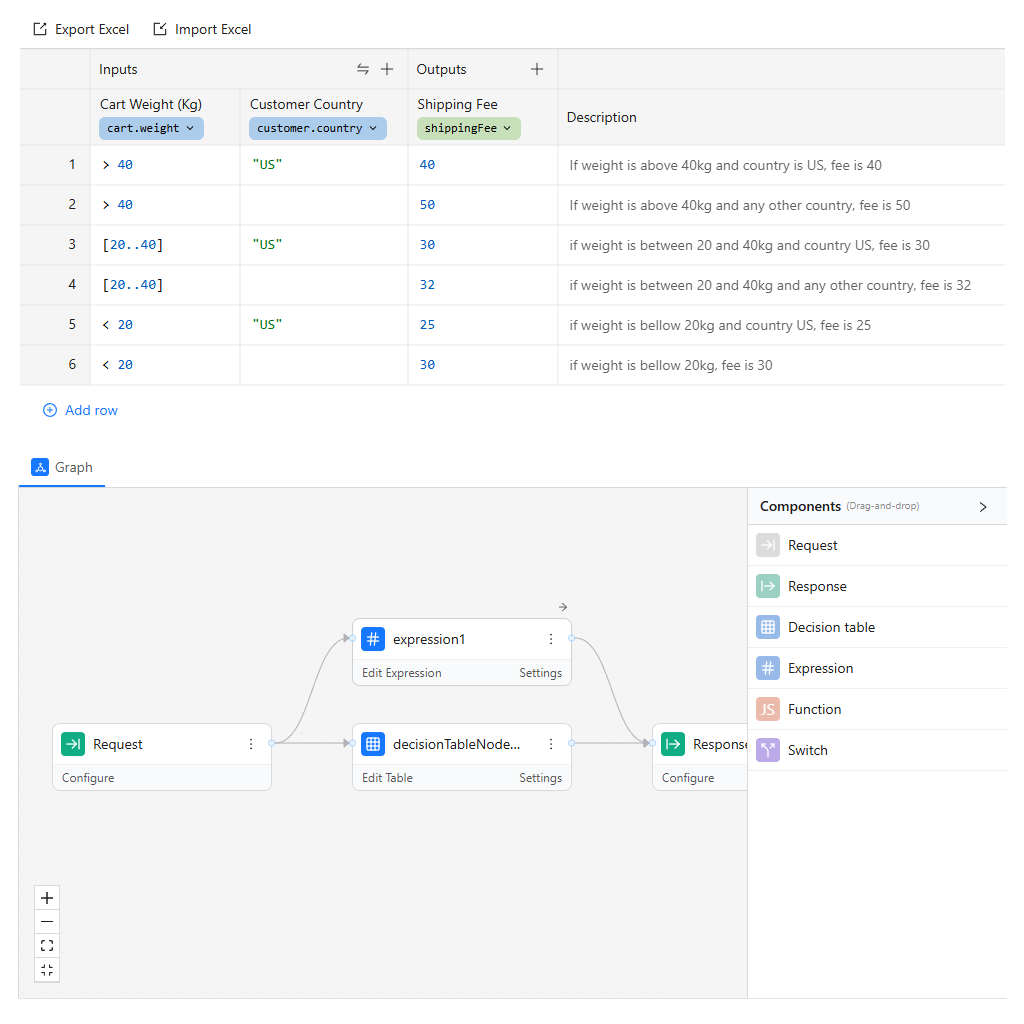
Every evaluation is a pure function of input context, producing consistent outcomes you can trace, audit, and defend.
Combine decision tables, expressions, and reusable sub-decisions to capture nuanced logic without burying it in code.
Each save creates an immutable version you can simulate and compare before publishing—then roll back instantly if needed.
Standardize rules across workflows, teams, and domains so changes propagate safely and consistently.
Agentic AI and ML Models
Deploy production-grade agents that plan, act with tools, and stay governed from day one
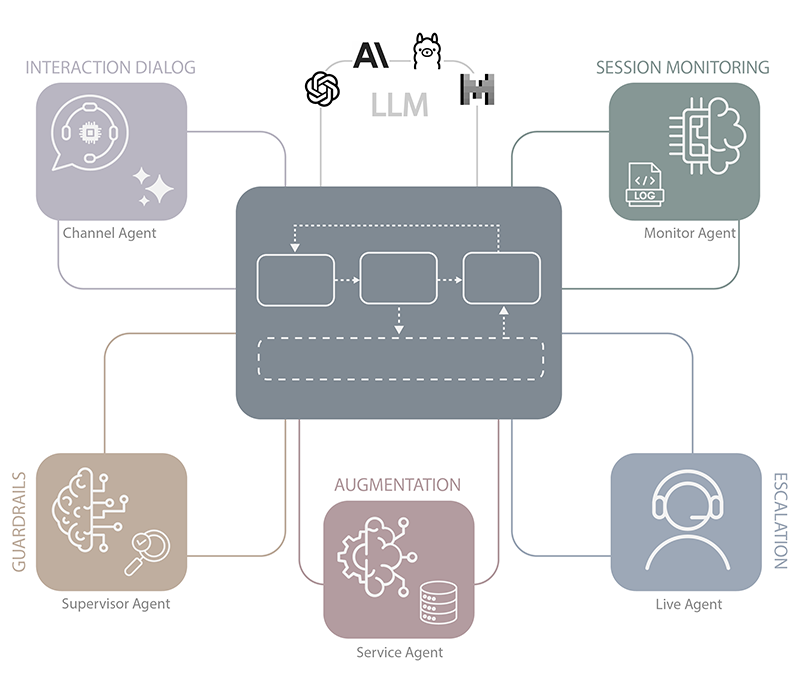
Coordinate planner/executor loops and specialized agents (research, critic, writer, operator) to tackle complex, multi-step work.
Connect to data and systems through typed tools and retrieval so outputs are evidence-based—not guesswork.
Apply policy checks, least-privilege permissions, and full traces of what was retrieved, called, and decided for compliance.
Monitor quality and drift, detect loops/timeouts, control cost with routing, and escalate to humans for high-stakes actions.
Tool Execution
Execute real-world actions safely with compiled commands, idempotency, and guardrails
Compile intents into commands with explicit targets, metadata, and schemas—so the same inputs always produce the same plan.
Use deterministic idempotency keys, deduplication, and backoff to make side effects safe under retries and partial failures.
Keep development and production traffic separated with dedicated streams and workers, enabling independent scaling and safer testing.
Track tool performance with metrics, structured logs, and traces, and classify failures consistently for fast triage and recovery.
Omnichannel
Treat every customer interaction as one connected conversation—across chat, messaging, email, and voice
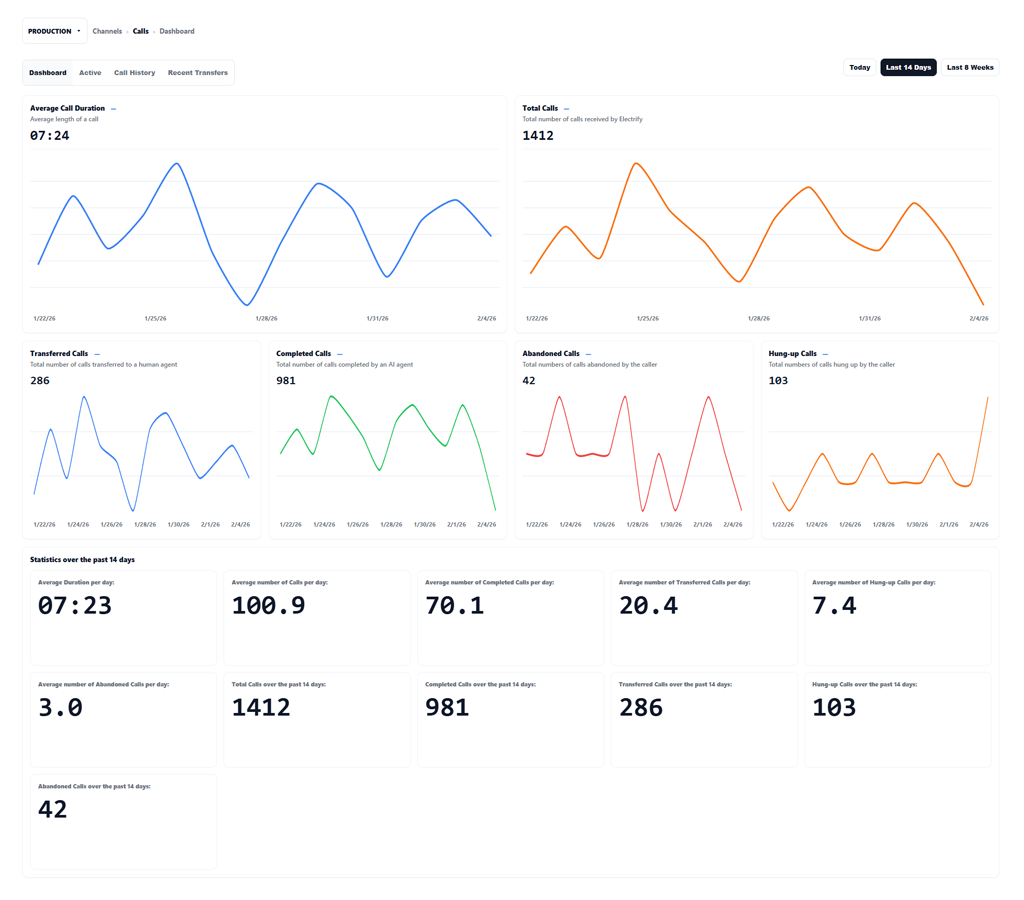
Resolve customers across channels and keep conversation history, preferences, and case state unified for every response.
Route to the best destination—automation or humans—based on urgency, consent, quiet hours, and service targets.
Escalate with full context, suggested replies, and recommended next steps so humans can step in without friction.
Track delivery outcomes, enforce channel-specific policies, and audit what was sent, when, and why—end to end.
Security and Policies
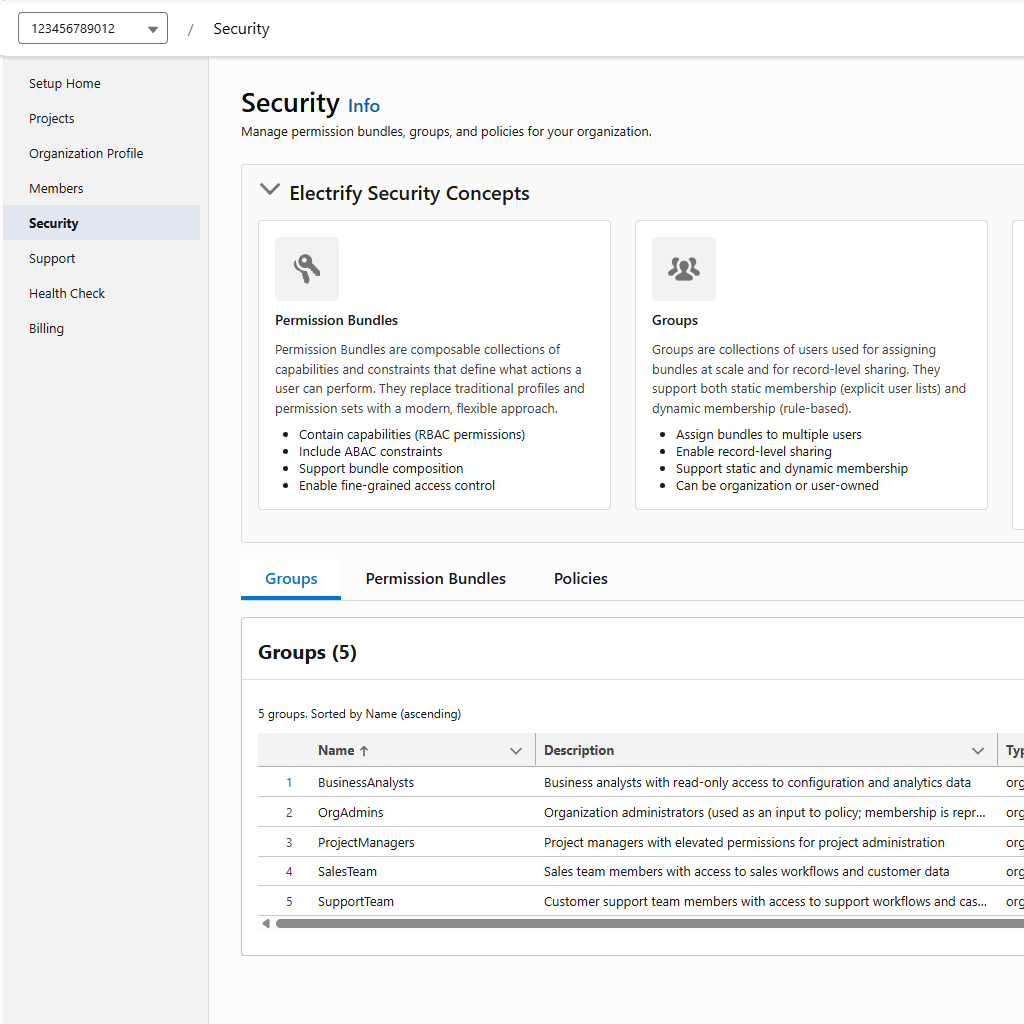
Enforce least-privilege access and compliant behavior across every workflow, event, and data view
Apply consistent authorization and governance across APIs, workflows, tools, and data access—before side effects occur.
Strong tenant boundaries keep organizations, projects, and environments separated so data and actions never leak across customers.
Control access at capability, object, and field levels, including PII classifications and automatic redaction when required.
Every allow/deny result is logged with explanations and traceable context to support compliance reviews and rapid support.
Observability
See what's happening end to end—health, performance, logs, and decision traces in one place
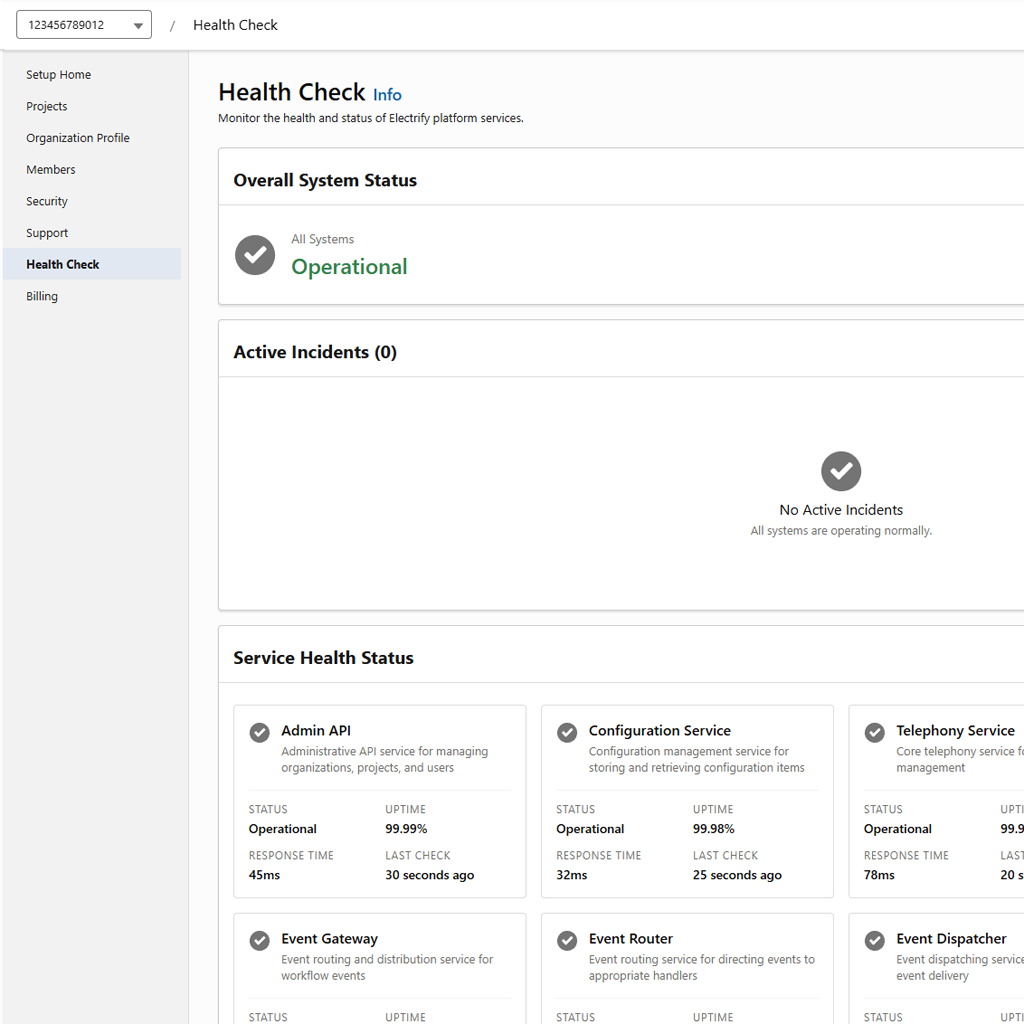
Know immediately what's operational and what needs attention, with clear service-level status and response signals.
Track throughput, latency, errors, queue lag, retries, and saturation to spot capacity issues before customers do.
Use structured, correlation-friendly logs to pinpoint failures, reproduce issues, and validate fixes quickly.
Understand what the system chose, what constraints applied, and what happened next—so automation is diagnosable and governable.
Storage
Move and manage large workflow data with artifact storage that stays organized, discoverable, and durable
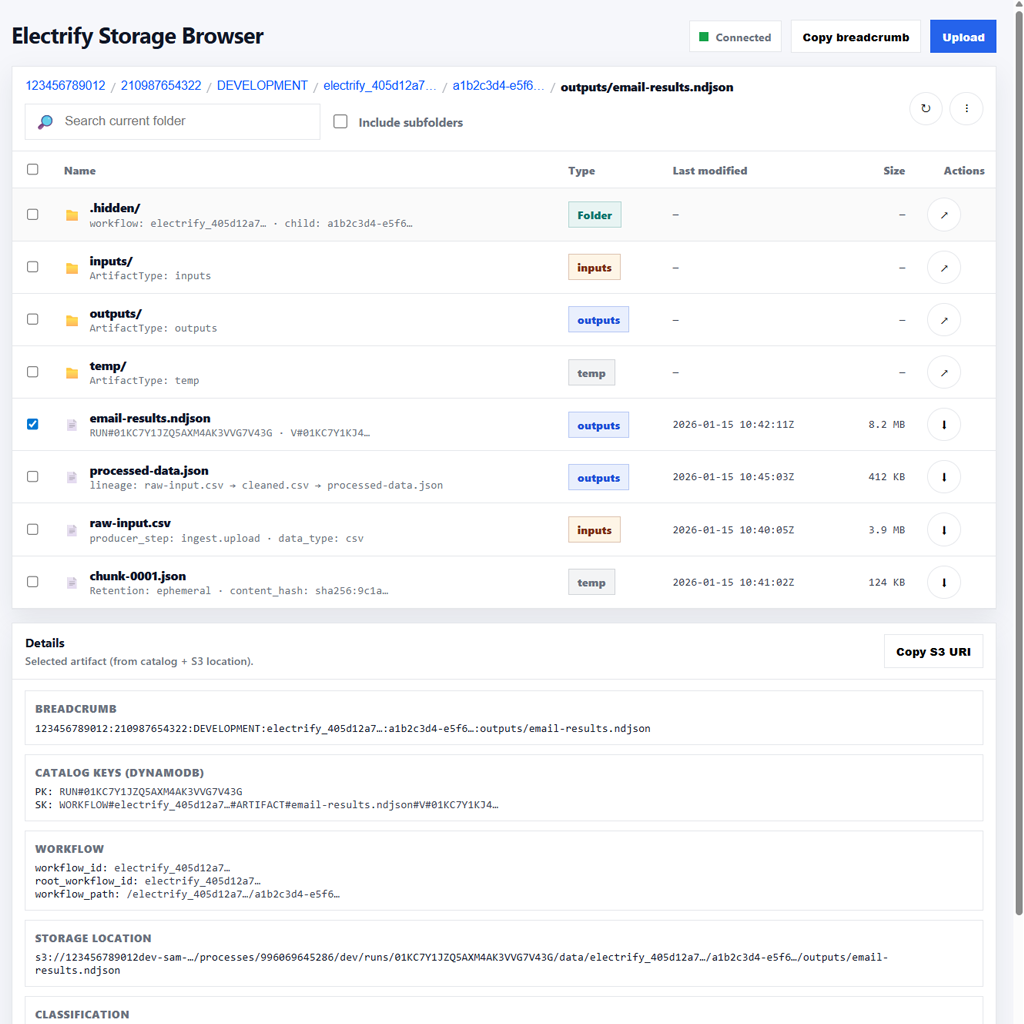
Keep artifacts organized by process, environment, run, and workflow so ops and tools can find what they need fast.
Register every artifact with metadata, versioning, retention class, and indexes for cross-workflow lookup and reporting.
Stream files and datasets as artifacts instead of passing megabytes through workflow payloads—improving reliability and performance.
Use standardized save/load primitives and hierarchical paths that work for root and child workflows across your automation stack.
Coordinate autonomous AI Workers to automate end-to-end, cross-system workflows and deliver deterministic outcomes at scale. Ready to talk?

Coming Soon