

Why Coordination Can't Be an Afterthought
When orchestration is bolted on, work breaks down between steps. You need coordination that's foundational, not optional
It moves through teams, systems, and timing—coordination has to span the whole chain, carrying context forward instead of re-creating it.
Approvals, upstream data, downstream handoffs, and shared resources persist—so the coordination layer must hold durable state and manage sequencing over time.
Retries, waits, and recovery are normal—coordination has to continue through interruptions and resume cleanly, not drop the thread.
You need deterministic execution and consistent handoffs—so outcomes stay reliable as complexity grows.
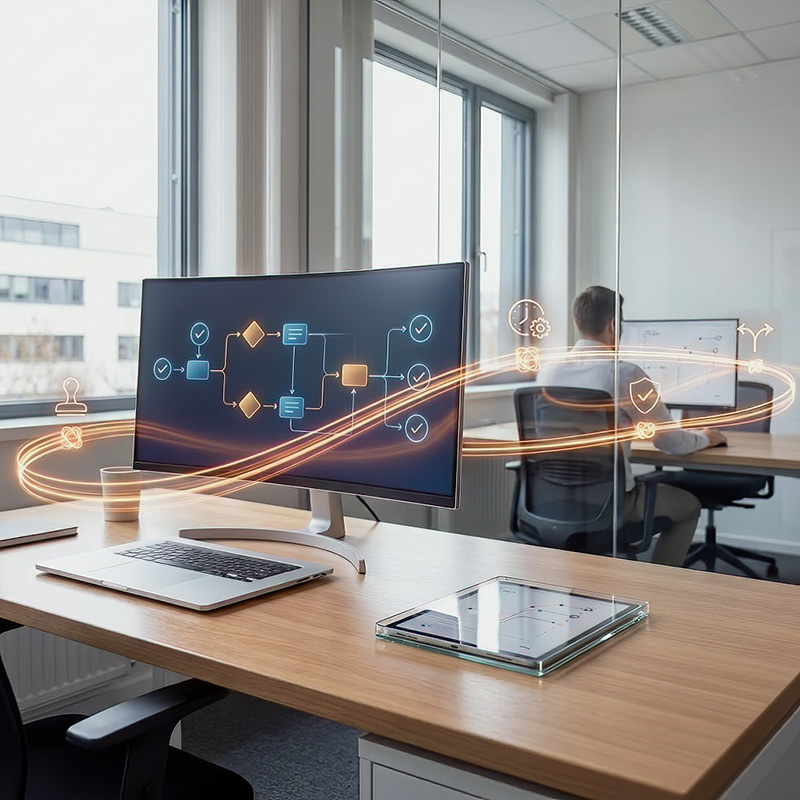
You Set Direction - The System Carries It Out
You define intent, priorities, and constraints. The system handles execution—without pulling you into every decision
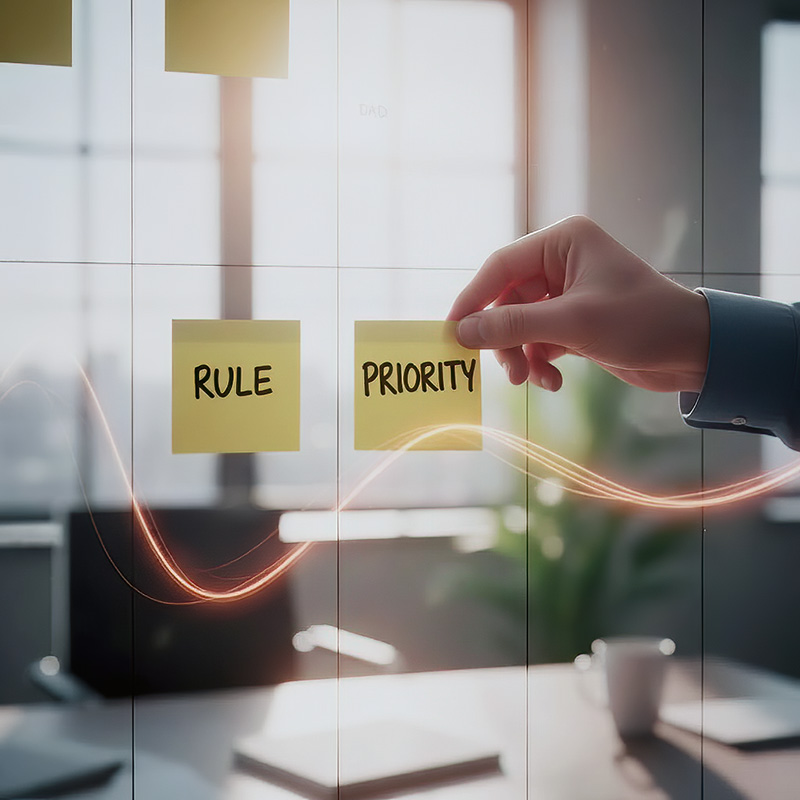
You set boundaries and priorities, and work runs within them—because intent and constraints stay with the work—so you avoid constant pings, approvals, and 'what next?' handholding.
When you look at a process, you see where it is, what it decided, and what it's waiting on—without chasing updates.
Your team focuses on direction, exceptions, and judgment calls; routine progress and coordination happen automatically.
Less mental bookkeeping, fewer handoffs to track, fewer status meetings—because the system carries the execution burden and preserves continuity end-to-end.
Work That Moves Across Boundaries Without Friction
Your work doesn't live in one team or one system. Orchestration should move cleanly wherever the work needs to go
As it moves from group to group, it carries context and requirements, and current state—so handoffs don't turn into rework.
Each team keeps its tools and accountability, while durable workflows carry handoffs end-to-end—so no one has to 'own the spreadsheet.'
You don't need everyone on the same stack to move work reliably—systems can stay different and still stay connected.
The right next step triggers when prerequisites are met—so work advances even when people aren't in the same meeting or time zone.

Coordinate autonomous AI Workers to automate end-to-end, cross-system workflows and deliver deterministic outcomes at scale. Ready to talk?

Coming Soon